Introduction
The Access Hubs project aims to make it easier to rent and share everyday items across Europe. We are a consortium of 12 partners across 6 countries, made up of municipalities, researchers, communicators, circular economy experts, and practitioners of reuse, repair and access based services. The consortium is led by Kringwinkel Antwerp, a network of second hand and repair shops based in Belgium, and they were the hosts of our launch meeting.
This event was the first time the project partners all came together in person to meet each other and start the team-bonding process. The partners were also very lucky to be treated to a series of guest lectures from experts and practitioners from across Europe’s rental and sharing ecosystem.
Learning from the Experience of Project Partners
The launch event kicked off with a series of talks from our expert partners which together provided an overview of the project and the access economy overall.
Setting the Scene
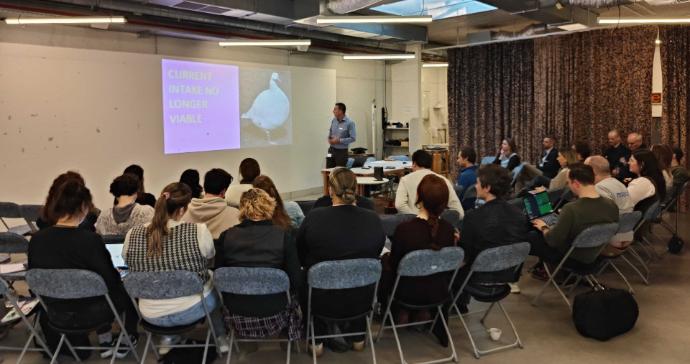
Access Hubs lead partner Kringwinkel Antwerpen were the first to take the floor, with CEO Hans Topp giving us an overview of their business and their experience of expanding into the world of renting and sharing. They shared some very impressive statistics, like the fact that they process over 10,000 tonnes of goods each year!
Warming Up
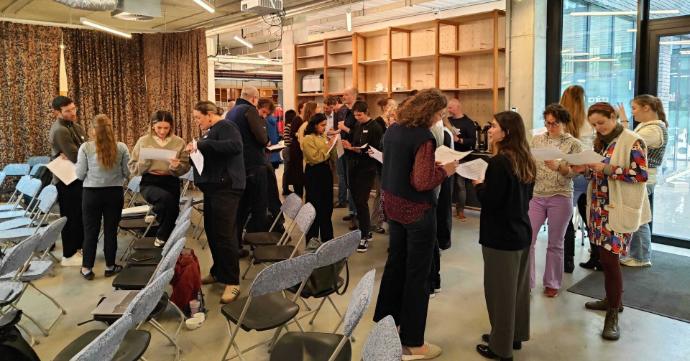
Next, project managers Bax Innovation led the consortium in a series of ice breaker exercises to help us get to know each other, before giving a short talk which focused on the context for the project, and where Access Hubs fits into the access economy in Europe.
Learning from Experts
After the talks from project partners, we were treated to a series of talks by external experts, from access economy practitioners to aggregator platforms.
Supporting Local SMEs
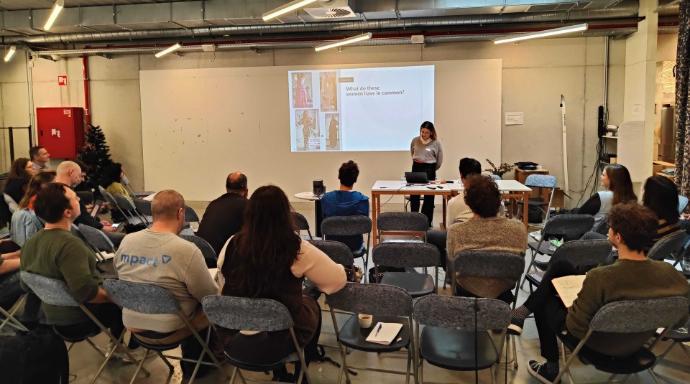
Project partners Made gave us an overview of circular business models, and the advantages and pitfalls of different ways of structuring a circular business. Next up was Caroline Baeten, founder and CEO of Dressr, an online clothing rental platform which she described as ‘Spotify for clothes’. Our final speaker before lunch was Alexandra from Vlaanderen Circulair (Circular Flanders), who spoke about a study that was conducted in Flanders looking at behaviours and attitudes around renting and sharing
After an incredible lunch provided by Kringwinkel (accompanied by some truly transcendent homemade Belgian chocolates), we heard from our last few speakers. First up after lunch was Sami Angsthelm from Bax Innovation, who spoke about the parallels between an access economy platform and platforms which facilitate mobility as a service by bringing multiple transport options together. In other words, what if renting and sharing items was as easy as putting your destination into Google Maps and choosing the best option for how to get from A to B.
Aggregator Platforms
This was followed by talks from three access economy aggregator platforms, Poppins, Peerby, and NGO Wij Delen (We Share). Poppins is a relatively new platform, but despite being the new kid on the block, they already had 300,000 users and 230,000 items available! Peerby is more established and shared insights about their new platform eCOHub, which aims to bring together all sorts of different circular services in one place. Finally, Wij Delen spoke about some of the tools they have been developing such as a local map of access services, and framed the mission in terms of increasing the market share captured by access services.
Dinner Time!
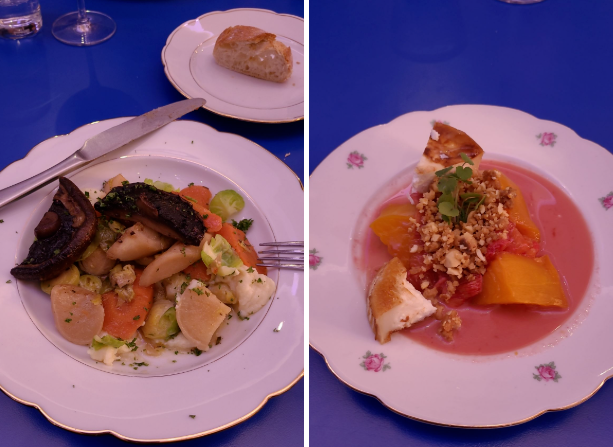
After a packed day of learning and insights, the group was treated to a world-class meal at the Samenloop restaurant in Antwerp. This is not just any restaurant, but also a social enterprise which provides training in fine dining to refugees seeking to improve their skills as restaurateurs. Under the supervision of a rotating cast of highly renowned chefs (many of which are Michelin-starred), the participants take favourite recipes from their home countries and elevate them to a level of mind-blowing quality and sophistication. We could not have asked for a better experience.
Seeing the Access Economy in Action
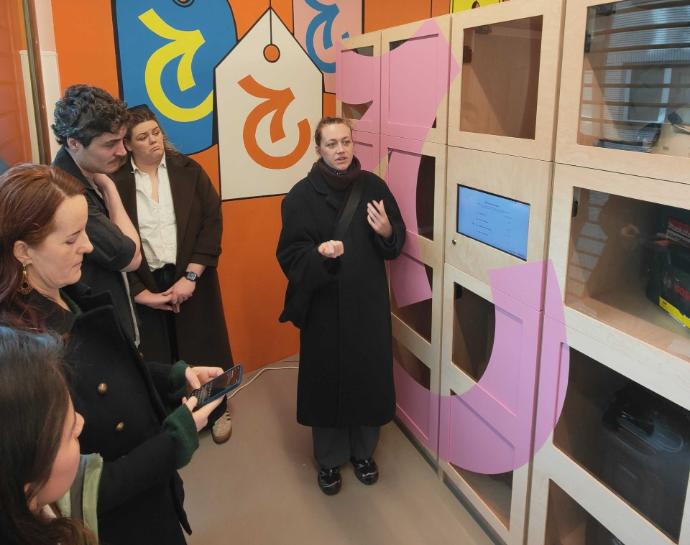
The second morning of the partner meeting started with a visit to two of the Kringwinkel sharing stations established as part of the Digital Kiosks Interreg project. For some of the partners, this was their first opportunity to see a functioning sharing station in real life!
Kringwinkel’s sharing stations are smart lockers where local citizens can borrow everyday items for short periods. The Kringwinkel team showed us how they worked, answered our many and varied questions, and gave us some very interesting insights from how the sharing stations were functioning in reality like which products were most sought after, and which had proven problematic.
Visiting Sharing Stations
The first sharing station was indoors at one of Kringwinkel’s second hand shops in Antwerp, meaning that it could only be accessed while the shop was open to the public. While this is a drawback, there are certain benefits that come with having the sharing station indoors. To illustrate this point, the second sharing station we saw was positioned outside of another of Kringwinkel’s stores. This one needed a couple of design modifications to facilitate keeping it outdoors:
First, there was a wooden overhang at the top of the station to help protect it from the elements. We were assured that the outside of the sharing station was also waterproof, but having this shelter reduces the wear and tear resulting from the rain. Second, there was a camera positioned over the sharing station to deter acts of vandalism. Having the sharing station be accessible to the public 24/7 makes it a lot more convenient for the user, but it also means you can’t always keep an eye on it.
Doing Some Shopping
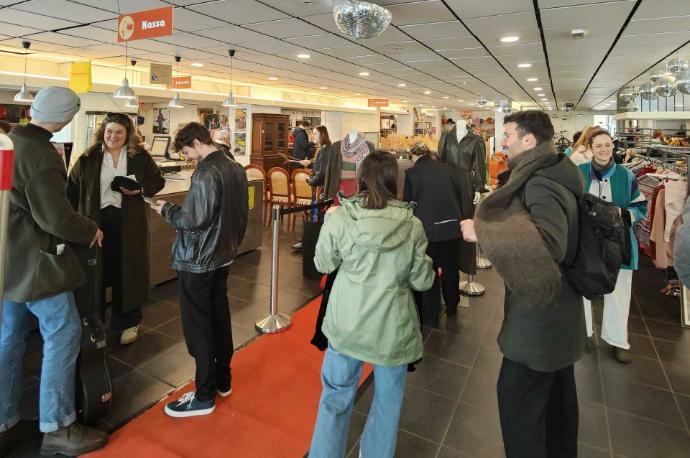
After being shown the sharing stations, the consortium was given some time to wander around the huge and beautifully laid out second hand shop, which sold a huge variety of items, including clothing, books, toys, DVDs, decorations, and so much more. One of the team members even left with a guitar!
Getting Down to the Nitty Gritty
After the fun of the site visits on the second morning, the group returned to our base camp to tackle some of the deliverables for the project. Energised and inspired by the first day of the launch event, the consortium broke into groups, then workshopped and brainstormed with passion (and all the energy we had left in the tank) to try and bring together the considerable expertise of the consortium members and further refine certain aspects of the project design moving forward. In addition to these workshops, we also had the opportunity to hear from our project officer with the Interreg programme, who answered all of our remaining questions about the project.
What Did We Learn?
The launch event was an unequivocal success. Not only did we come together to share insights about the access economy from across different countries, sectors, and areas of expertise, we also came together as a group of people with a shared passion and vision. The connections made between members of the consortium will surely only strengthen over the coming two and half years as we tackle the remainder of the project.
Some of the key learnings across the two days were:
Changing habits is the biggest challenge. People are open to the idea of renting and sharing, but making it a real habit takes a lot of effort and the right communication.
Cities are essential. They can provide space, be the first customer, bring in partners, and communicate to citizens. Without cities, the access economy is much harder to build.
Logistics is the hidden cost. Cleaning, repairing, and managing returns is expensive. Solving this will be key to making the model financially and environmentally sustainable.
The platform question is still open. How to govern, fund, and scale an access platform is one of the most important questions the project needs to answer in year 1.
We would like to say a big thank you to our new friends from across Europe who gave the external talks on the first day of the event. Their insights and expertise were invaluable, and inspired us by showing us that it really is possible to make access based services work as a business model, provided you do it in the right way.
We look forward to welcoming the partners for the next partner meeting, which will take place at the Rediscovery Centre in Ireland in November of 2026. After that event, we will have more learnings to share, and more stories to tell. See you then!